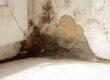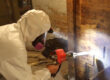
The short version: Mold remediation isn’t one spray or a single cleaning. It’s a process. We find the mold and the moisture that’s feeding it. We seal off the area, clean the air, and remove the mold at the root with chemical-free dry ice blasting. Then we dry everything out and test again to make sure it worked. The point isn’t to hide mold. It’s to get rid of it and keep it from coming back.
Finding mold in your home is stressful. So is being told you have it after an inspection. Once you get past the first worry, which is usually “is this dangerous?”, most people ask a simple question. What actually happens to fix it?
That’s a fair thing to wonder. The word “remediation” gets used pretty loosely in our industry. Some companies spray a chemical on the surface, call it done, and move on. That’s not remediation. That’s covering up the problem and hoping it stays hidden.
Real mold remediation is a step-by-step process. It removes the mold at its source, and it fixes whatever let the mold grow in the first place. Here’s what that looks like when you work with us.
Why “Removing the Mold” Isn’t the Whole Job
Here’s the thing. Mold is a sign of a moisture problem.
Think of a boat with a hole in it. You can bail out the water all day, but until you patch the hole, you’ll keep bailing. Mold is the same. If you scrub it off the wall but never fix the leak or the humidity that caused it, the mold just grows back. Usually in the same spot.
So good remediation always does two things at once. It removes the mold you have now, and it fixes the moisture source behind it. Skip that second part and the mold comes back. That’s the most common reason people end up calling someone twice.
Step 1: Inspection and Assessment
Every job starts with a real inspection. We’re not just looking at the mold you can see. We’re looking for why it’s there.
That means finding all of it, including mold hiding behind drywall, under floors, or up in the attic. And it means tracing it back to the source. That could be a roof leak, a damp basement, bad ventilation, a plumbing issue, or just high humidity in the house. Skip this step and you’re guessing. Guessing gets expensive.
Step 2: Mold Testing
To know what we’re dealing with, we take air and surface samples and send them to an independent lab.
Air testing compares the mold spore levels inside your home to the levels outside. If the inside numbers are off, that tells us there’s a problem and helps us figure out where it’s coming from. Surface samples tell us what kind of mold it is. This is the difference between an actual diagnosis and someone glancing at a wall and throwing out a number.
Step 3: Containment
Mold spreads through spores. And when you disturb mold during cleanup, those spores can float into clean parts of your home.
So before any work starts, we seal off the area. That keeps the cleanup from turning a small problem into a whole-house one. This step is easy to skip, and it’s easy to tell when a company skipped it. It’s a big reason cheap jobs spread mold instead of removing it.
Step 4: Air Filtration
With the area sealed off, we run air treatment to deal with the spores that go airborne during removal. That’s a mix of dehumidification to cut the moisture and HEPA filtration to clean the air. HEPA filtration can capture up to 99.7% of airborne particles. We can also use an Aerosolver treatment, which fogs a non-toxic solution as a fine mist to clear mold particles out of the air.
That keeps the air cleaner while we work and healthier when we’re done. It matters a lot in homes where someone has allergies, asthma, or a sensitivity to mold.
Step 5: Mold Removal, the Chemical-Free Way
This is the main event, and it’s where we’re different from most of the industry. We remove mold without chemicals. No fogging, no spraying.
We also don’t rely on just one tool. We pick the right chemical-free method for the situation, and we often use a few together:
- Dry ice blasting. This is our signature method. It uses pressurized dry ice to lift mold off the surface and get down to the root, not just the part you can see. No chemicals, no residue.
- HEPA vacuuming. Right after blasting, we go over the area with a HEPA vacuum. It pulls out the loosened spores and particles, down to 0.03 microns, and removes up to 99.97% of them.
- Wire brushing. A simple, hands-on way to remove mold from a small, specific spot.
- Sanding. For mold that’s gotten deeper into a material. We pair it with a HEPA vacuum, so we remove the root and clean the air at the same time.
- Small particle cleaning. We wipe down hard surfaces like walls, floors, ceilings, cabinets, and furniture with a safe ethanol and water solution. This gets the spores and the dust that traps them.
- Cleaning. We finish with HEPA vacuums and manual, chemical-free cleaning throughout the space, so spores don’t spread or come back.
The thing all of these have in common is simple. Nothing harsh gets left behind in your home. A lot of “treatments” leave chemicals that can sit in a house for months or even years. Nobody wants that, and it’s a real problem for people who are already sensitive. We get the mold out without trading it for a chemical problem.
Step 6: Drying and Moisture Control
Remember the boat with the hole? This is where we patch it.
Once the mold is gone, we dry the area out completely and deal with the moisture problem that started all of this. Sometimes that means better ventilation. Sometimes it’s a dehumidifier. Sometimes it’s a repair we’ll point you to. Getting the humidity under control is what keeps the mold from coming back.
Step 7: Restoration
Then we put things back. We repair or replace any materials that had to come out, so your space looks and works the way it should again.
Step 8: Verification
Good remediation ends the way it started. With testing.
We do follow-up air testing to confirm the mold levels are back to normal and the job worked. That’s your proof, not just our word, that the home is healthy again. If a company can’t show you before-and-after results, ask why.
How Long Does It Take?
It depends on how big the problem is and where it is. A small, contained spot can go fast. Widespread mold, or mold that’s reached structural wood, an attic, or a crawlspace, takes longer.
Here’s the honest answer. No good company can give you an exact timeline or price without seeing the space first. Every mold situation is different. But the process doesn’t change. Whether it’s one room or a whole basement, these are the steps that get mold out the right way.
We’re Here to Help
If you’ve found mold, think you might have a hidden moisture problem, or just want a straight answer about what remediation would look like for your home, we’re happy to walk you through it. We do safe, chemical-free mold remediation for homes and businesses across Southeast Michigan and Northwest Ohio. The goal is always the same. Get rid of the mold for good and give you back your peace of mind.
Call us at 734-439-8800 or email peaceofmind@moldprollc.com today.